
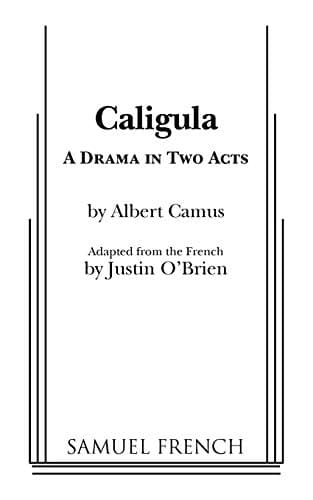
Caligula
by Albert Camus

What readers are saying
Readers appreciate the depth and philosophical themes of the play, highlighting its exploration of existentialism and the character of Caligula. Many find the writing powerful and thought-provoking, with a strong emotional impact. However, some critiques mention that the character's portrayal can feel overly dramatic at times.
Synopsis
Caligula was born into an illustrious Roman family.
His father was Germanicus, a hugely popular and talented general, who, before his early death, was seen as the natural heir of the reigning Augustus.
Caligula was a fond nickname meaning "Little Boots" (his real name was Gaius), given to him by the soldiers in Germanicus' legions who loved to see the young boy in the camps dressed in a military uniform.
When the cruel and unpopular Emperor Tiberius (who had succeeded Augustus) died, Caligula was swept into office on a wave of good will.
But Caligula turned out to be the most insane Caesar of Rome.
His evil deeds surpassed both Tiberius, who reigned immediately before him, or Nero, who ruled shortly after.
Press Reviews
"Has given the theatre a red hot glow."
— N.Y. World Telegram & Sun
Publication
Caligula is a adaptation play written by Albert Camus and published by Samuel French (1989).
Digital editions available on Amazon Kindle.
Community Reviews
No community reviews yet
Buy Play
Where to buy
New
Performance Rights
Restrictions: Major Markets Only (US) / Standard Restriction (UK)
Apply for Rights
Similar Plays
Plays with similar themes, style, and content.




![Romeo and Julius [Caesar] Book Cover](https://assets.playwright.co/cdn-cgi/image/width=320,quality=75,format=auto/plays/covers/romeo-and-julius-caesar-jeff-goode.png)

More from Albert Camus
More plays from Albert Camus that we think you'll enjoy.