Cyrano de Bergerac
by Edmond Rostand

Highlights
Awards & Recognition
Winner! 2020 Olivier Award for Best Revival
What readers are saying
Readers are captivated by the emotional depth and poetic beauty of this classic play. Many appreciate the timeless themes of love and sacrifice, as well as the vibrant characters, particularly Cyrano himself. The writing style is often praised for its lyrical quality, making it a joy to read. Overall, it is regarded as a masterpiece that resonates deeply with audiences.
Synopsis
`Tonight When I make my sweeping bow at heaven's gate, One thing I shall still possess, at any rate, Unscathed, something outlasting mortal flesh, And that is ...
My panache.' The first English translation of Cyrano de Bergerac, in 1898, introduced the word panache into the English language.
This single word summed up Rostand's rejection of the social realism which dominated late nineteenth-century theatre.
He wrote his `heroic comedy', unfashionably, in verse, and set it in the reign of Louis XIII and the Three Musketeers.
Based on the life of a little known writer, Rostand's hero has become a figure of theatrical legend: Cyrano, with the nose of a clown and the soul of a poet, is by turns comic and sad, as reckless in love as in war, and never at a loss for words.
Audiences immediately took him to their hearts, and since the triumphant opening night in December 1897 - at the height of the Dreyfus Affair - the play has never lost its appeal.
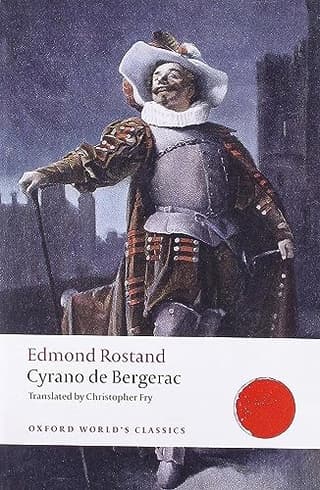
The text is accompanied by notes and a full introduction which sets the play in its literary and historical context.
Christopher Fry's acclaimed translation into `chiming couplets' represents the homage of one verse dramatist to another
About the Series: For over 100 years Oxford World's Classics has made available the broadest spectrum of literature from around the globe.
Each affordable volume reflects Oxford's commitment to scholarship, providing the most accurate text plus a wealth of other valuable features, including expert introductions by leading authorities, voluminous notes to clarify the text, up-to-date bibliographies for further study, and much more.
Press Reviews
"★★★★★ “The most breathtakingly exciting show in London right now."
— Evening Standard
"Heart-stopping... the program says that the text is a ‘new version’ by Martin Crimp. Yes, well, in the sense that fire can be considered a ‘new version’ of wood."
— Vulture
"This version of the play... is more about Cyrano de Bergerac's first love: language... Crimp updates the language to incorporate more modern poetry, creating a spoken-word rendition set in 1640 that plays with current pop-culture references."
— Entertainment Weekly
"Alive with the love of language... This is not your grand-mère’s Cyrano. Replacing Rostand’s stately 12-syllable alexandrines with jumpier rhythms, its euphemisms with plain speech and its perfect rhymes with ones so slant they serve as italics, Crimp rockets the action to a world drunk on language as it’s actually spoken. It’s also a world in which, as the baker Ragueneau (now a poet, too) predicts, ‘There’s going to be a new force of words’... I spent most of the production’s swift two acts fully engaged in its humor, pathos and fury."
— The New York Times
"A revivifying take on Cyrano. With a whip-smart script by Martin Crimp, the production highlights a cool new vocabulary for Edmond Rostand’s sentimental monument to love."
— The Washington Post
Characters
| Character |
|---|
Christian Man |
Cyrano Man |
De Guiche Man |
Denise (Student) Woman |
Le Bret Man |
Lignière Man |
Madame Ragueneau Woman |
Man Man |
Marie-Louise (Student) Woman |
Montfleury Man |
Priest Man |
Roxane Woman |
Valvert ManThe following roles can be played by actors of any gender: |
Annoying Person |
Armande (Student) |
Audience Members And People Who Shout From The Auditorium |
Fencing Referee |
Group Of Soldiers* |
Theatre Owner |
Usher |
Woman Sent By Roxane |
Alastair Man |
Videos
"Cyrano de Bergerac" by Edmond Rostand performed at Bob Jones University
Available Editions


Publication
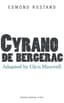
Cyrano de Bergerac is a French adaptation play written by Edmond Rostand and published by Oxford University Press in Oxford (2008).
Digital editions available on Amazon Kindle, Google Play (eISBN 9780191605758).
Community Reviews
No community reviews yet
Buy Play

From $4.00 total
New · Used · Digital
Sign in to track your order — or just check out as a guest.
- Amazon.comUsedBest priceFree shipping$4.00
- AbeBooks.comUsedFree shipping$4.60
- AbeBooks.com$2.67 shipping$8.85
- Amazon.comCheck price
- Bookshop.orgCheck price
- Apple BooksInstant$12.99
- Amazon KindleInstant$13.45
Digital prices may vary by region and tax jurisdiction.

Similar Plays
Plays with similar themes, style, and content.




More from Edmond Rostand
More plays from Edmond Rostand that we think you'll enjoy.